When you finally reach a place your heart has been calling. Your duas for Umrah have come true. There is something about Makkah that cannot be explained in words. You don’t feel like you “arrived” there in a normal way. It feels like your heart was already there long before your body reached it.
And then you step into the Haram, and everything inside slows down. Even thoughts feel different, and silence feels heavier. You see people from every part of the world, all standing the same way, all heading toward the Kaaba. And in that moment, something becomes clear that you are not just here to perform rituals. You are here because Allah allowed you to be here.
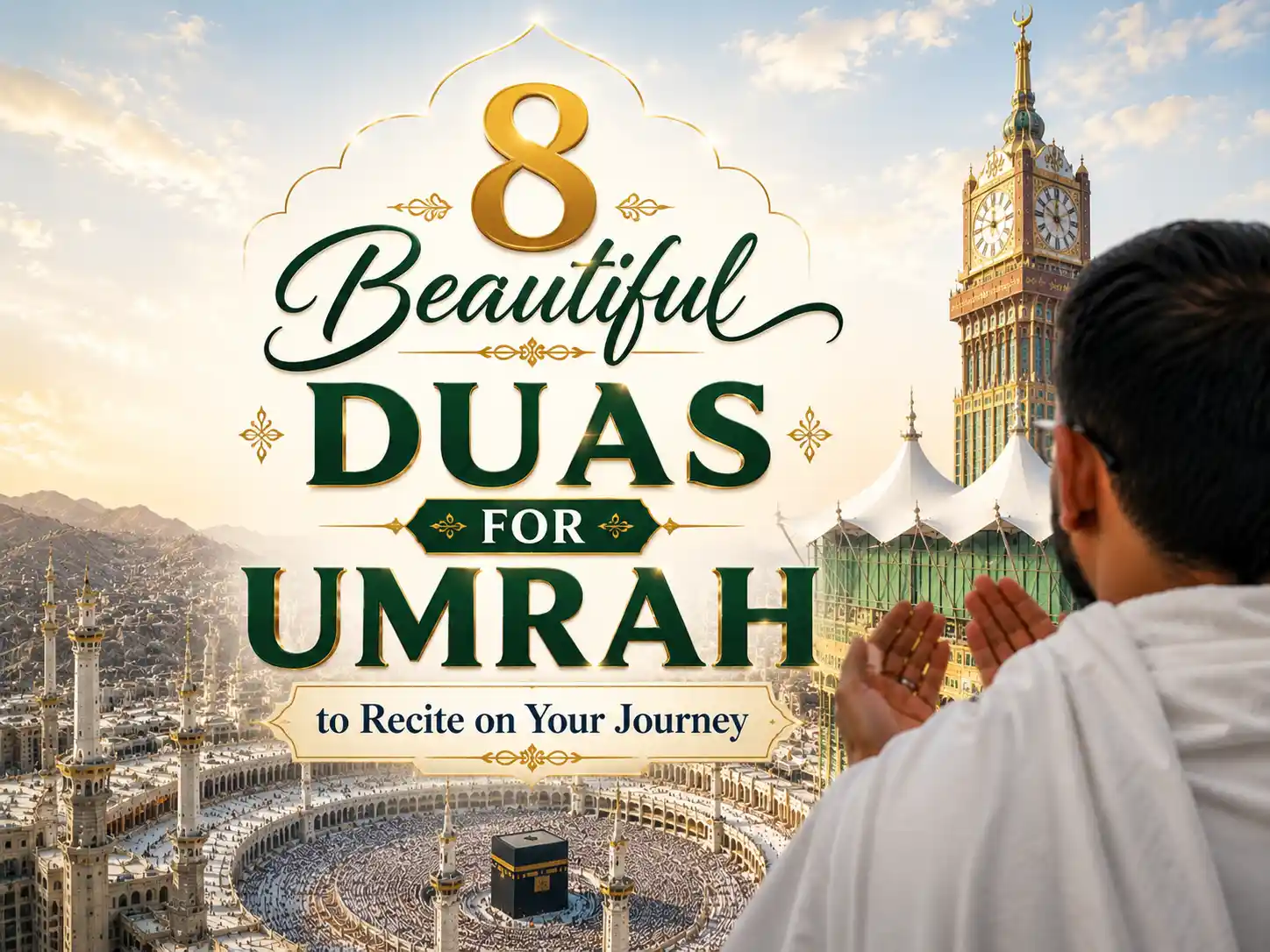
That is why Duas For Umrah are not just words. They are emotional responses of a heart that finally feels present in front of Allah. Below is the real flow of Umrah, with authentic duas and deeper reflection at each stage.
1. When entering Masjid al-Haram
بِسْمِ اللَّهِ، وَالصَّلَاةُ وَالسَّلَامُ عَلَى رَسُولِ اللَّهِ، اللَّهُمَّ افْتَحْ لِي أَبْوَابَ رَحْمَتِكَ
“In the name of Allah, and peace and blessings be upon the Messenger of Allah. O Allah, open for me the doors of Your mercy.”
Entering the Haram is not like entering any other place. You don’t just walk in, you feel yourself being absorbed into something sacred. This dua is not asking for something specific, like wealth or ease. It is something deeper. You are asking to be allowed into mercy itself.
And the strange thing is, you already start feeling it before you even finish the dua properly. The calm, the crowd, the Qur’an in the background—it all feels like mercy is already surrounding you.
2. When you first see the Kaaba
اللَّهُمَّ إِنَّكَ عَفُوٌّ تُحِبُّ العَفْوَ فَاعْفُ عَنِّي
“O Allah, You are Pardoning, and You love to pardon, so pardon me.”
This moment cannot be trained or prepared for. You see it, and something inside just stops reacting normally. Some people cry instantly, some stand frozen, some just keep staring without realizing time is passing. It is not emotional in a dramatic way, but it is overwhelming in a quiet way.
At that moment, your life feels very small, but not meaningless. It feels placed correctly. Like everything you ever worried about suddenly sits under something much greater. This is why people say this is the most unforgettable moment of Umrah.
3. Before starting Tawaf
بِسْمِ اللَّهِ وَاللَّهُ أَكْبَرُ
“In the name of Allah, Allah is the Greatest.”
Tawaf looks simple from the outside. Just walking in circles. But when you are inside it, it feels different. You are aware of every step. You are aware that millions before you have done the same thing. This phrase resets intention. It removes distraction. It brings everything back to one point, for Allah only.
4. Duas for Umrah During Tawaf around the Kaaba
رَبَّنَا آتِنَا فِي الدُّنْيَا حَسَنَةً وَفِي الْآخِرَةِ حَسَنَةً وَقِنَا عَذَابَ النَّارِ
“Our Lord, give us good in this world and good in the Hereafter and protect us from the Fire.”
There is no strict script during Tawaf. That is important to understand. You can repeat this dua, or speak from your heart, or even stay silent and just feel. Because while you are walking, your mind will not stay in one place. You will think about your life, your mistakes, your family, your future, and sometimes things you never spoke to anyone about.
And somehow, that becomes part of worship too. Each round feels slightly different. Some feel heavy. Some feel peaceful. Some feel like an emotional release you didn’t plan.
5. After Tawaf at Maqam Ibrahim
رَبِّ اجْعَلْنِي مُقِيمَ الصَّلَاةِ وَمِن ذُرِّيَّتِي رَبَّنَا وَتَقَبَّلْ دُعَاءِ
“My Lord, make me an establisher of prayer, and [many] from my descendants. Our Lord, accept my supplication.”
After Tawaf, everything slows down. You stand, breathe, and pray two rak’ahs. But mentally, you are still processing what just happened.
This place carries history. Prophet Ibrahim (AS) built the Kaaba with trust, not certainty. He obeyed without knowing every outcome. Standing here reminds you that faith is not always about understanding, but it is about submitting. And for a few minutes, everything feels quiet again.
6. Drinking Zamzam water
اللَّهُمَّ إِنِّي أَسْأَلُكَ عِلْمًا نَافِعًا وَرِزْقًا وَاسِعًا وَشِفَاءً مِنْ كُلِّ دَاءٍ
“O Allah, I ask You for beneficial knowledge, abundant provision, and healing from every disease.”
Zamzam is not rushed. You don’t treat it like normal water. There is a pause before and after drinking. Therefore, recite this ayah among duas for Umrah. Because it connects you to a moment of struggle and trust, Hajar (AS), alone, searching, and still believing Allah would not abandon her. So when you drink it, it becomes personal. People often make dua here that they never said out loud before.
7. During Sa’i (Safa and Marwah)
اللَّهُ أَكْبَرُ، اللَّهُ أَكْبَرُ، اللَّهُ أَكْبَرُ
لَا إِلَهَ إِلَّا اللَّهُ وَحْدَهُ لَا شَرِيكَ لَهُ، لَهُ الْمُلْكُ وَلَهُ الْحَمْدُ، يُحْيِي وَيُمِيتُ، وَهُوَ عَلَى كُلِّ شَيْءٍ قَدِيرٌ
لَا إِلَهَ إِلَّا اللَّهُ وَحْدَهُ، أَنْجَزَ وَعْدَهُ، وَنَصَرَ عَبْدَهُ، وَهَزَمَ الْأَحْزَابَ وَحْدَهُ
“Allah is the Greatest, Allah is the Greatest, Allah is the Greatest.”
There is no god but Allah alone, with no partner or associate. His is the Dominion, and to Him belongs all praise. He gives life and causes death, and He is over all things capable.
There is no god but Allah alone. He fulfilled His promise, granted victory to His servant, and defeated the confederates alone.”
This is where effort becomes worship. You walk back and forth, and physically it feels repetitive, but emotionally it feels meaningful. Because now you are remembering Hajar (AS), a mother in extreme difficulty, running between hope and fear, but never giving up trust in Allah. And when you understand that, your own struggles start to feel different. Not lighter, maybe, but understood.
8. After completing Umrah
اللَّهُمَّ تَقَبَّلْ مِنِّي عُمْرَتِي وَاغْفِرْ لِي
“O Allah, accept my Umrah and forgive me.”
This is not a celebration. It is quiet and almost uncertain. Because you don’t feel “done”, but you feel changed, but unsure how much.
So you ask Allah to accept it anyway. Not because you are confident, but because you are hopeful. And that hope is what you leave with.
Final Thoughts
Umrah is not only about completing rituals between the Mataf and the Rawdah; it is a journey that stays with the heart. Every step, every Duaas for Umrah, and every moment around the Kaaba bring reflection and awareness of Allah’s mercy and greatness.
When the journey is over, it doesn’t feel like anything is over, but it feels like something has settled inside you. However, memories of the Tawaf, Sa’i, Zamzam, and the peaceful moments of prayer stay with you. A
And for many, this journey begins after choosing the right Umrah packages, but its impact continues long after you return home, connecting with Allah in your thoughts, feelings, and daily life.