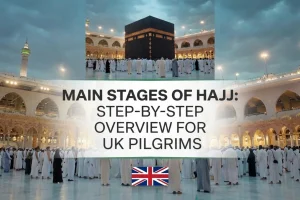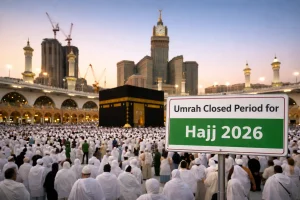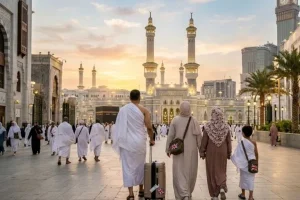
Before you start your spiritual journey, you must learn the stages of Hajj to perform rituals perfectly. Imagine standing on a vast plain with millions of souls, all stripped of their worldly titles, wearing nothing but simple white cloth, and crying out to their Creator. It isn’t just a trip; it is a spiritual revolution. Hajj is the journey where your past dies, and your future begins.
At Al Zowar Travel, we know that when you step onto that sacred soil, you aren’t just a tourist, you are a guest of Allah (SWT). You need more than just a map; you need to understand the heartbeat of every ritual.
If you are ready, explore our Hajj packages today to find the ideal option for you to reset your soul.
What is Hajj & Its Importance in Islam?
Hajj is the ultimate “reset” button for a Muslim. It is the fifth pillar of Islam, a mandatory duty for those who possess the means, but its weight goes far beyond a simple checklist. It is a live reenactment of the devotion of Prophet Ibrahim (AS) and the struggle of his family. When you perform all stages of Hajj, you walk in the footsteps of Prophets.
The Prophet Muhammad (PBUH) gave us the ultimate motivation when he said:
“Whoever performs Hajj for Allah’s sake and does not have sexual relations with his wife, and does not do evil or sins, then he will return (after Hajj free from all sins) as if he were born rather now.” (Sahih Bukhari).
When you are ready for Hajj obligations, explore our customized Hajj packages at Al Zowar Travel and find the best fit for your comfort.
12 Main Stages of Hajj Rituals You Must Know
1: What Is Ihram and How Do You Enter It?
Ihram is your entry point into sanctity. It is far more than just two pieces of white cloth for men or modest dress for women; it is a state of total prohibition against the ego. You enter Ihram at the Meeqat by making a firm intention (Niyyah) and raising your voice with the Talbiyah: “Labbayk Allahumma Labbayk” (Here I am, O Allah, here I am). Once you say these words, you leave the world behind.
2: What Is Tawaf al-Qudum and Why Is It Important?
As soon as you enter Makkah, your heart will race. Tawaf al-Qudum is your “Welcome Tawaf.” You circle the Kaaba seven times, moving counter-clockwise. However, this ritual proves that Allah is the center of your universe. You aren’t just walking in circles; you are aligning your soul with the celestial harmony of the angels who circumambulate the throne of Allah.
3: What Is Sa’i Between Safa and Marwah?
After Tawaf, you move to the hills of Safa and Marwah. You walk the path of Hajar (AS), the mother of Ismail (AS). As she ran seven times searching for water in a barren desert, you run to show Allah your desperation for His mercy. However, it teaches us that while we must strive with all our might, the “Zamzam” in our lives only comes from Allah’s command.
4: Importance of Mina Among the Stages of Hajj?
On the 8th of Dhul-Hijjah, the “Day of Tarwiyah,” you move to the massive tent city of Mina. You spend your time in prayer and contemplation. There are no major rituals here, just you, your fellow pilgrims, and your Creator. Meanwhile, it is the quiet before the spiritual storm of Arafat, a day to gather your strength.
5: What Is the Significance of Arafat?
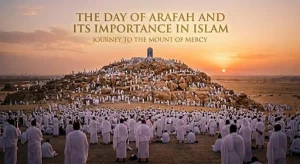
The 9th of Dhul-Hijjah is the day that defines your Hajj. The Prophet (PBUH) famously said, “Hajj is Arafat.” From noon until sunset, you stand on the plains of Arafat in intense supplication (Dua). It is a rehearsal for the Day of Judgment. Allah descends to the lowest heaven, expressing pride in His servants to the angels and wiping away lifetimes of sin in a single afternoon.
6: What Should Pilgrims Do in Muzdalifah?
Once the sun sets on Arafat, you don’t stay to celebrate. You move quietly to Muzdalifah. You combine your Maghrib and Isha prayers and spend the night under the open stars. This is a night of humility. You sleep on the ground like everyone else and collect the small pebbles you will need for the days ahead.
7: How to Perform Rami (Stoning of the Jamarat)?
On the 10th of Dhul-Hijjah, you return to Mina for Rami. You throw seven pebbles at the Jamarat al-Aqaba, the largest pillar representing the devil. This isn’t just throwing stones at a wall; it is a symbolic strike against your own inner demons and the temptations that lead you away from the straight path.
8: What Is Qurbani (Sacrifice) and Its Purpose?
Qurbani is comes among the most important stages of Hajj. After the first stoning, you perform the Qurbani. This sacrifice honors the moment Prophet Ibrahim (AS) placed his son on the altar in total submission to Allah. Meanwhile, it reminds us that nothing, not even our most beloved possessions, should come between our Lord and us. Also, the meat feeds the hungry, turning your devotion into a mercy for the world.
9: What Is Halq or Taqsir and When Is It Done?
Now comes the physical transformation. Men perform Halq (shaving the head) or Taqsir (trimming), while women cut a small lock of hair. This signifies that you have shed your old self. You are now “partially” out of Ihram. However, it allow a now to change into your normal clothes and celebrate the day of Eid.
10: What Is Tawaf al-Ifadah?
You return to the Kaaba for Tawaf al-Ifadah. This is a cornerstone of the Hajj. You circle the House of Allah with a new heart, one that has stood at Arafat and rejected the devil at the Jamarat. Once you finish this, the final restrictions of Ihram are lifted.
11: Is Sa’i Repeated During Hajj?
This depends on your type of Hajj. If you chose Hajj al-Tamattu, you must perform a second Sa’i after your Tawaf al-Ifadah. For those doing Ifrad or Qiran, you may have already completed it. This walk reaffirms your commitment to the path of Hajar (AS) even after your “rebirth.”
12: What Is Tawaf al-Wida and Its Importance?
However, the final step is Tawaf al-Wida. It is also called the Farewell Tawaf. As you prepare to leave the holy city, you circle the Kaaba one last time. It is often the most emotional moment for a pilgrim. You ask Allah to make this not your last visit to His house and to keep the light of Hajj burning in your heart once you return home.
Common Mistakes Pilgrims Make During Hajj
Excessive Photography: Don’t let your phone screen come between your eyes and the Kaaba.
Impatience in Crowds: Pushing others to reach the Black Stone can ruin the spirit of your worship.
Neglecting the Niyyah: Always remind yourself why you are there. Hajj is for Allah, not for a title
Why Understanding the Stages of Hajj Matters
If you don’t know the why behind the “what,” Hajj becomes merely a series of physical exercises. When you understand each stage, each step becomes a conversation with Allah. You move forward with purpose, pray with focus, and return with a Hajj Mabroor (an accepted Hajj).
Conclusion
Hajj is a spiritual journey of a lifetime. However, it deserves your best preparation. Also, from the first “Labbayk” in Ihram to the final tear shed during Tawaf al-Wida, every second is an opportunity for salvation. At Al Zowar Travel we are honored to be part of your story. May Allah accept your efforts and grant you a safe and transformative pilgrimage. Book Hajj packages now and travel with your group and family together.