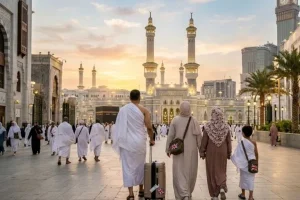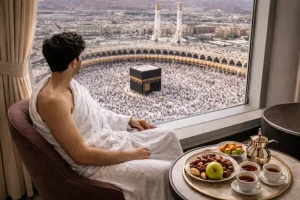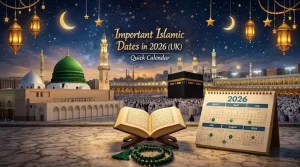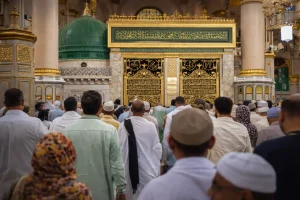
If you live in the UK, you’ve probably heard Hajj and Umrah mentioned together your whole life. Parents talk about “saving for Hajj one day,” while friends share photos from their latest Umrah trip. Both journeys take you to Makkah, both centre on the Ka’bah, and both can completely change the way you see your life. But Hajj and Umrah are not the same, and if you are planning your first pilgrimage, that difference really matters.
In simple terms, Hajj is the major, mandatory pilgrimage that happens once a year on fixed dates in Dhul Hijjah, while Umrah is a shorter, flexible “minor pilgrimage” that can be done most of the year. One is a pillar of Islam (Hajj), the other is a highly encouraged Sunnah (Umrah). Both can move your heart in ways you don’t expect.
This guide explains the difference between Hajj and Umrah. By the end, you’ll understand what each journey involves, how they affect your choice of Hajj Packages or Umrah Packages, and which trip might make sense for your situation right now.
What Is Hajj?
Hajj is one of the Five Pillars of Islam. It is not just a recommended journey; it is an act of worship that becomes obligatory once in a lifetime for every Muslim who is adult, sane, financially capable, and physically able to travel. When those conditions are met, Hajj is no longer an idea on a vision board; it becomes a clear duty between you and Allah.
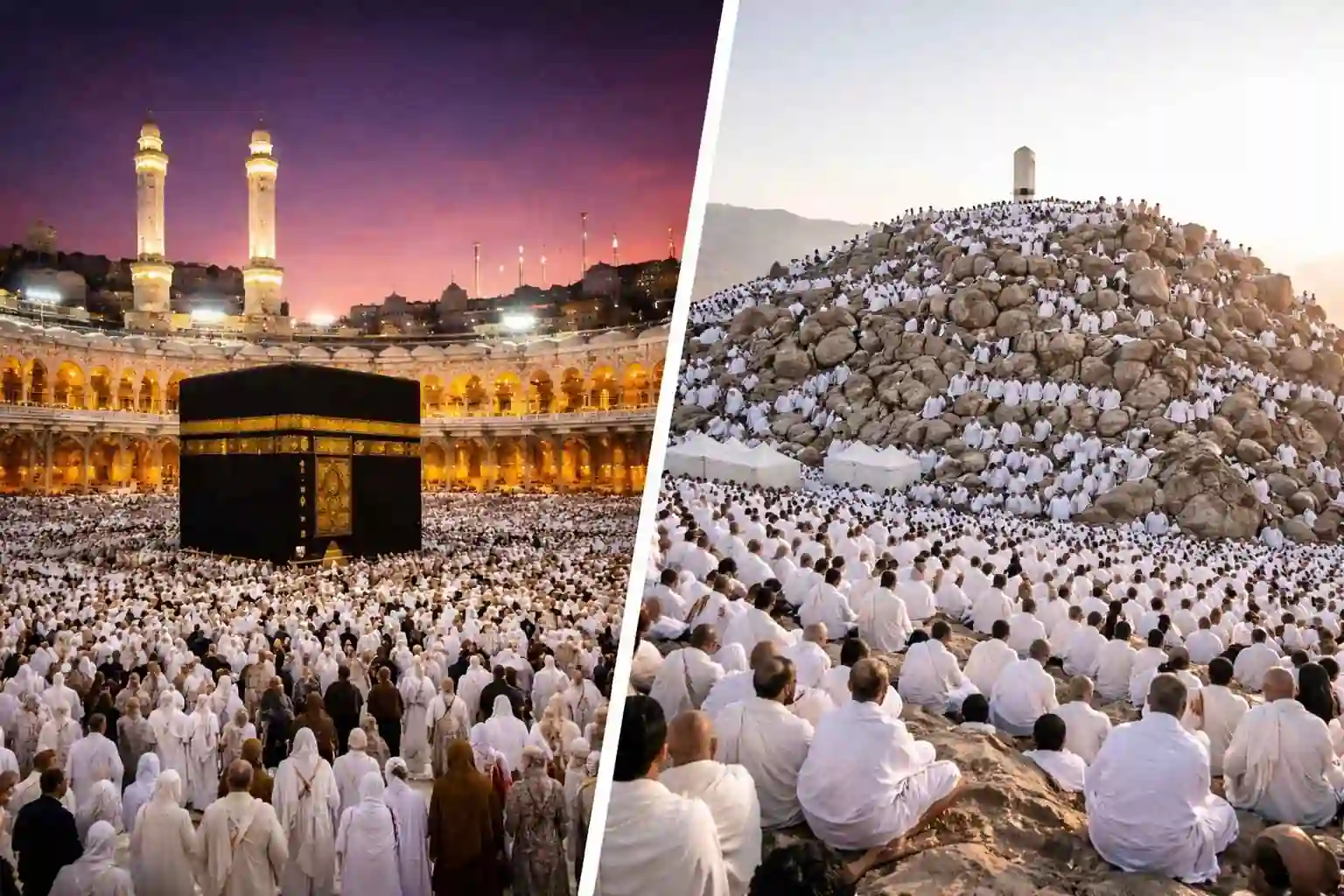
Hajj takes place during the last month of the Islamic calendar, Dhul Hijjah, on specific dates: from the 8th to the 12th or 13th. During those days, millions of Muslims gather in and around Makkah to perform a series of structured rituals. Pilgrims enter the state of ihram, perform Tawaf around the Ka’bah and Sa’i between Safa and Marwa, but they also do more: stand at Arafat, spend the night in Muzdalifah, stay in Mina, and stone the pillars known as Jamarat. These extra steps are what make Hajj longer, more demanding, and deeply intense.
For a UK Muslim, Hajj usually involves serious planning. You’re not just picking dates and grabbing a cheap flight; you’re looking at Hajj Booking through approved systems, choosing from structured Hajj Packages, and preparing your body and mind for several days of heat, crowds, and constant movement. It’s a journey that asks a lot from you, and gives even more back.
What Is Umrah?
Umrah is often described as the “lesser” or “minor” pilgrimage, but that doesn’t mean it is minor emotionally or spiritually. It is a shorter set of rituals performed in Makkah that can be done at almost any time of the year, outside the core Hajj days. Umrah is not counted as one of the Five Pillars, but it is a beloved Sunnah that the Prophet ﷺ performed multiple times and strongly encouraged.
The basic structure of Umrah is simple. You enter ihram from a miqat, make your intention, and then, upon reaching Makkah, you perform Tawaf around the Ka’bah, followed by Sa’i between Safa and Marwa. At the end, men shave or trim their hair, and women cut a small portion of their hair. Once that is done, your Umrah is complete, and you leave the state of ihram. Many people manage to complete these rites in a few hours, though they might stay in Makkah and Madinah for days to soak in the experience.
From a UK perspective, Umrah is usually more flexible. Umrah Travellers can browse different Umrah Packages and Umrah Deals, choose a time that suits school holidays or annual leave, and select how long they want to stay in each city. It’s often the first taste of the Haramain for many families before they later commit to Hajj.
Key Differences Between Hajj and Umrah
Let’s see the difference between the two rituals:
Obligation and Significance
The clearest difference between Hajj and Umrah lies in their level of obligation. Hajj is fardh for those who meet the conditions. It is a pillar of Islam, just like prayer and fasting in Ramadan. Once Hajj becomes possible for you, it is something you are expected to do at least once in your life, and delaying it without a valid reason is strongly discouraged.
Umrah, on the other hand, is not fardh in the same way. It is highly recommended as a Sunnah and an act of worship rich in reward, but it is not on the same compulsory level as Hajj. Some Islamic schools view it as necessary, others as strongly recommended, but all agree it is incredibly valuable for the heart. The important point for planning is that Umrah does not replace Hajj; even if you do Umrah many times, the duty of Hajj remains if you are able.
You can think of it like this: Hajj is a foundation stone in the structure of your faith, while Umrah is a repeated renewal of that foundation whenever Allah opens the door.
Timing and Duration
Another major difference is the timing. Hajj can only be performed during the days of Dhul Hijjah. There is no flexibility on that; it is locked into the Islamic calendar and happens once a year. If you are choosing a Hajj Package, every part of it will revolve around those specific dates, and the whole world seems to arrive in Makkah at the same time.
Umrah, by contrast, gives you much more freedom. You can perform it in most months of the year, whether that’s a quiet period in term time, a half-term break, winter holidays, or the special atmosphere of Ramadan. The core rituals of Umrah can often be completed within 3–6 hours once you are there, whereas Hajj usually spans five or six days of back-to-back actions, plus travel days on either side.
For a UK family that has to balance work, school, health problems, and budgets, the difference in timing and length is often the most important thing. Hajj is a big event in your life that takes a lot of time and focus, while Umrah is a deep spiritual retreat that fits better into the flow of your year.
Rituals and Complexity
Both Hajj and Umrah share some core acts: entering ihram, performing Tawaf, completing Sa’i between Safa and Marwa, and finishing with shaving or cutting the hair. These shared elements are often what you see in photos and videos when friends and relatives come back from their trips.
However, Hajj adds several additional layers that Umrah does not have. During Hajj, you spend long hours in Mina, you stand on the plains of Arafat asking for forgiveness under the sun, you sleep under the open sky in Muzdalifah, and you take part in the symbolic stoning of Shaytan at the Jamarat. There is also the sacrifice that marks Eid al-Adha and further Tawaf before you leave.
In other words, Umrah focuses on the sacred core in Makkah itself, while Hajj stretches out across multiple locations and days. The logistics are more demanding, the movement more intense, and the experience more physically and mentally testing. This is one reason many people prefer to experience Umrah at least once before attempting Hajj, especially if they have health concerns or have never travelled to Saudi Arabia before.
Cost, Logistics, and Travel Packages
Because of its length, structure, and scale, Hajjis almost always more expensive and complicated than Umrah. Hajj Packages tend to include international flights, accommodation in Makkah and Madinah, tents in Mina and Arafat, internal transport, meals in certain locations, and support staff or guides. There are also quotas, official systems, and regulations to follow, so Hajj Booking usually needs to be done well in advance.
Umrah is generally more accessible from a financial and planning point of view. Umrah Packages range from budget-friendly options with simple hotels to more luxurious stays right next to the Haram. You can often choose your trip length and standard of hotel, mix Madinah and Makkah nights in different ways, and take advantage of seasonal Umrah Deals when prices drop. For many UK Muslims, Umrah becomes a repeated journey they make at different stages of life: as newlyweds, with young kids, or later in retirement.
Spiritual Reward
The rewards of both Hajj and Umrah are huge, but they are described in different ways. An accepted Hajj, often called Hajj Mabrur, is described in hadith as having no reward except Paradise. Hajj, if accepted by Allah, can wipe out a lifetime of sins and reset your record in an extraordinary way.
Umrah, while not a pillar, also carries an enormous reward. It is known to wipe away sins between one Umrah and the next and to bring the servant closer to Allah through sincere dua, tawbah, and humility. There are narrations stating that Umrah in Ramadan has a reward similar to Hajj, but this is about reward and does not cancel the obligation of performing Hajj itself.
In practical terms, you might think of Hajj as a once-in-a-lifetime “full reset” if Allah accepts it, and Umrah as a powerful, repeated spiritual deep clean that keeps your heart soft and connected.
Hajj vs Umrah – Quick Glance For Better Understanding
| Aspect | Hajj | Umrah | |
|---|---|---|---|
| Obligation & Status | One of the Five Pillars of Islam. Obligatory once in a lifetime for every adult Muslim who is physically, mentally, and financially able. | A highly recommended Sunnah. Not a pillar in the same way as Hajj. Can be performed multiple times. | |
| Timing | Only during 8–12 (or 13) Dhul Hijjah each year. Fixed dates. | It can be performed most of the year, outside the core Hajj days. Much more flexible. | |
| Typical Duration (on ground) |
|
Core rites are usually completed in 3–6 hours, though most travellers stay 5–14 days in Makkah/Madinah. | |
| Core Rituals | Ihram, Tawaf, Sa’i, shaving/trimming hair plus standing at Arafat, overnight in Muzdalifah, days in Mina, stoning the Jamarat, Qurbani, farewell Tawaf. | Ihram, Tawaf around the Ka’bah, Sa’i between Safa and Marwa, shaving or trimming the hair. Fewer steps, simpler flow. | |
| Spiritual Status | An accepted Hajj Mabrur is described as having no reward except Jannah, and can wipe out a lifetime of sins if accepted. | Wipes away sins between one Umrah and the next and brings the servant closer to Allah. Umrah in Ramadan carries the reward like Hajj, but does not replace the obligation of Hajj. | |
| Physical Demand | High – long walks, heat, large crowds, overnight stays outdoors or in tents, multiple site changes (Mina, Arafat, Muzdalifah). | Moderate, depending on season and crowd level, mainly walking during Tawaf and Sa’i, plus general movement around the Haramain. | |
| Average Cost from the UK (per person) | Varies by year and standard. Many UK Hajj packages are at roughly £7,500–£10,000+ per person, with economy at the lower end and VIP/5-star at the higher end. | Most Umrah Packages from the UK often start from about £600–£700 for basic/off-peak deals, with an overall average around £800–£900 and 4–5 star or peak/Ramadan trips going above £1,000+ per person. | |
| Visa Type | Hajj visa or equivalent approved route for the specific Hajj season, often bundled inside official packages. | Umrah visa or an eligible visit/tourist visa, depending on current Saudi rules; usually, it is more straightforward and quicker to arrange. |
Similarities Between Hajj and Umrah
Despite their differences, Hajj and Umrah have a lot in common. Both take you to the sacred city of Makkah in Saudi Arabia. Each requires you to enter a special state called ihram, where normal habits and clothing are set aside in favour of simplicity and focus. They involve Tawaf around the Ka’bah, that central point of the Muslim world, and Sa’i between Safa and Marwa, following in the footsteps of Hajar as she searched for water for her son.
More importantly, both are journeys designed to pull you away from your normal routine and place you directly in front of Allah with as few distractions as possible. Whether you are there for five days of Hajj or a weekend-style Umrah, the core purpose is the same: to seek Allah’s pleasure, to ask for forgiveness, to clean your heart, and to go home different from how you arrived.
Which Should You Do First – Hajj or Umrah?
Many UK Muslims wrestle with this question. The honest answer is that it depends on your circumstances. If Hajj has already become obligatory for you, and you have the health, money, and ability to go, many scholars will say you should not keep delaying it for years without a valid reason. In that case, you can explore suitable Hajj Packages and plan for the next available Hajj season.
However, if you are still building your savings, not in great health, or completely new to travelling to Saudi Arabia, then Umrah can be a wise first step. It allows you to understand the layout of the Haramain, get used to the climate and crowds, learn how Tawaf and Sa’i work in practice, and see how your body copes with walking and standing. Many people find that doing Umrah first removes a lot of anxiety about Hajj later.
In real life, a lot of families in the UK go on one or two Umrah trips before they plan their Hajj when the time is right. The most important thing is to stay focused on your goal and make sure your plans are realistic so that you’re ready when Allah opens the door.
Practical Thoughts for UK Hajj and Umrah Travellers
Once you understand the difference between Hajj and Umrah, your planning becomes much easier. You can speak to a trusted, UK-based Umrah/Hajj travel company like Alzowar Travel and explain your situation honestly: your health, your budget, your family set-up, and your previous travel experience. A good travel agent will not only show you prices; they’ll help you decide whether you’re better suited to a flexible Umrah Package right now or whether it’s time to push yourself a bit and commit to Hajj.
For some people, a shorter Umrah in off-peak months is the ideal way to travel with elderly parents or young children. For others, especially those who fear their health may decline, going straight for Hajj makes more sense. Either way, understanding how Hajj and Umrah differ will help you read package descriptions properly, compare genuine Umrah Deals, and choose flights, hotels, and itineraries that support your main goal: standing before Allah with a calm, prepared heart.
Key Takeaways
If you’re at the stage where you’re comparing dates, prices, and routes, don’t rush the decision. Think about your health, your family, your savings, and the kind of experience you want this first journey to be. Make your intention clear, keep making dua, and then choose the path that feels most honest between you and Allah.
When you’re ready to make that reservation, it’s helpful to have a team that knows the difference between Hajj and Umrah, not just the star ratings of hotels. You can book your Umrah or Hajj trip with a reliable UK-based agency like Al Zowar Travel. They will take care of your visas, flights, and hotels so you can focus on what really matters: standing in front of the Ka’bah with an open heart.